Description
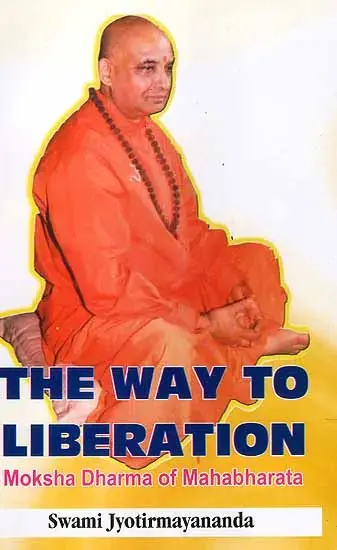
IntroductionThe Mahabharata is the mother of the world’s most popular scripture – the Gita, which contains the teachings of Lord Krishna. It was composed by Sage Vyasa many centuries before Christ. This grand scripture consisting of eighteen volumes is an extraordinary religious epic.His Holiness, Sri Swami Jyotir Maya Nanda, the author of over fifty books on Yoga philosophy and related subjects, has written this book steeped in profound knowledge of the Mahabharata for the aspirants of the East as well as the West. The writings of Sri Swami Jyotir Maya Nanda contain a unique blend of simplicity, literary beauty, mystic insight, and a light to guide you on the path to Self-realization.Swami Jyotir Maya Nanda’s genius lies in writing his profound thoughts and making them alive, almost walking with a dynamic movement. Each one should give this book the fullest and most careful consideration. Consequently, you will feel rushing within a breeze blessed with blazing dispassion, that will dispel fear and doubts which have been restraining you upward movement to the Self-realization.The Mahabharata is known as the fifth Veda because it deals with all the topics that concern the individual soul on its way to spiritual evolution. It details upon Dharma (ethical value), Artha (material value), Kama (vital value), and Moksha (the infinite spiritual value of life). There is a popular saying, ‘What is not found in the Mahabharata cannot be found in any other scripture. Whatever is there in other scriptures is definitely present in Mahabharata”Moksha Dharma Parva of the Mahabharata contains the sublime teachings that enable an aspirant to understand the problems of his life in the light of the primary duty of his existence – the attainment of liberation or Self-realization. The teachings were given by Great Bhishma who was a mighty hero among the warriors of ancient India, and even a greater hero in the spiritual field of life. Though lying on the bed of arrows, this majestic personality continued to counsel King Yudhishthira, day after day, on all important subjects that enrich human life and enable the soul to move towards its final attainment – liberation.The present book contains selected portions of Shanti Parva, the Volume dealing with Peace, retold by Sri Swami Jyotir Maya Nanda in a manner that will enable the reader to gain a deep insight into the beauteous writings of the Mahabharata. The very study of this book is considered highly auspicious. Pious men in India read this section of the Mahabharata to promote harmony and peace in the atmosphere, to remove obstacles and adversities, to acquire health, peace and prosperity, and to move on to the glorious summits of spiritual perfection. Actual chapter numbers are included to help serious students of the Mahabharata.Stories and parables, illustrations and poetic images, pithy instructions and penetrating insights are blended in this book. Through the study of this book, along with the first volume, one can gain the storehouse of ancient wisdom which is so needed in the troubled times of the present world. May God bless you! Contents Publisher’s Note3Dedication5IntroductionviiiHow to Remove Grief1The Primary Duty of a Person in this Transient World8The Glory of Renunciation12The Song of a Brahmin Called Manki14Prahlad and Avadhuta on the Attitude of Detachment18A Dialogue Between Kashyapa Brahmana and Indra23Fruits of Karma26The Glory of Right Conduct and the Defect of Sinfulness28The Knowledge of Self30Yoga of Meditation35Glory of Japa (Repetition of Mantra)37He Who Falters in Japa Falls Into Hell40Even Heavenly Words Are Hell for a Japaka41Story of Japaka Brahmana and King Ikshwaku43Prajapati Manu and Sage Brihaspati51The Nature of Self and the Manner of Realizing It55The Eternal Nature of the Self57The Method of Attaining Self-realization59The Method of Attaining, Brahman, the Absolute61The Nature of the Supreme Self64Bhagavan Krishna: The Source of Creation67Story of Bhagavan Varaha71The Wheel of the World-process82Study of the Three Gunas85Detachment From Sensual Enjoyments87Practice of Brahmacharya And Vairagya for Liberation89Instructions for Attaining Brahman92Sage Panchashikha Expounds the Nature of the Self99Regarding the Nature of the Self103Story of Shwetaketu and Suvarchala105The Nature of Austerity111Spiritual Instructions by Sanat Kumara112Indra and Bali119Lakshmi Abandons Bali124Indra and Namuchi127Indra and Bali130Qualities That Please Goddess Lakshmi132The Nature of Time136Yuga Dharma140Description of Brahma Pralaya and Maha Pralaya144The Glory of Serving the Brahmanas146The Duties of a Brahmana and the Manner of Crossing the Stream of Time148Yoga of Meditation151The Predominance of Intellect156The Glory of Wisdom and the Means of Attaining It159God Is Realized Through Yoga161The Difference Between Action and Knowledge164The Conduct of a Sanyasi167The Method of Attaining god-realization171Description of the Evolutes of Nature174The Greatness of Intellect176Characteristics of a Wise Man178The Method of Crossing the River of the World-process180Characteristics of a Knower of Brahman182Functions of the Five Great Elements185Self Differentiated from the Three bodies186The Tree of Desire & the Manner of Eradicating It187More About the Five Elements, Mind & Intellect189Story of the Origin of Death191Death Practises Austerity, And Is Ordained to Destroy Living Beings193An Insight Into Dharma and Adharma199The Story of the Ascetic Jajali201Tuladhara Explains the Nature of Dharma203Tuladhara Gives Spiritual Instructions205Jajali Receives Instructions from Birds207The Story of Gautama and Chirkari210Story of the Brahmana & Kundadhara Megha217Questions on Dharma, Adharma, Vairagya & Moksha221The Way to Self-realization225A Son Instructs his Father Regarding the Transitoriness of the World-process229Transitoriness of the World-process229The Method of Attaining Brahman234Vritrasura Receives Instructions from the Sanat Kumaras236 Sample Pages